Deep Brain Stimulation (DBS) for Advanced Parkinson’s Disease: The Window for Intervention
One of the first questions families ask after a stroke is simple, but very heavy: “Doctor, will he move again? Will she ever walk?
Deep Brain Stimulation (DBS) for Advanced Parkinson’s Disease: The Window for Intervention
<
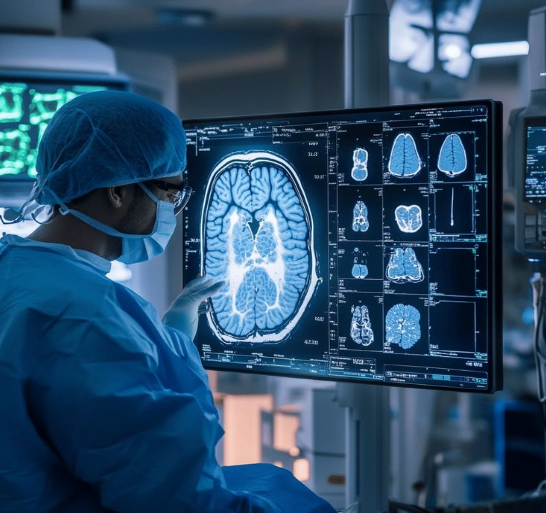
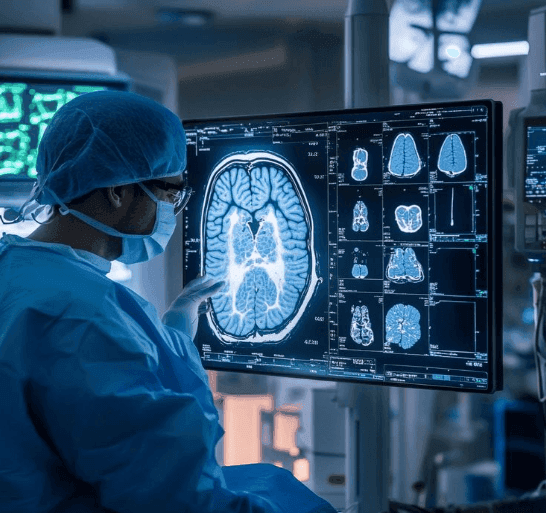
img style="display: block; margin: 50px auto; max-width: 100%; height: auto; border-radius: 25px; box-shadow: 0 25px 50px rgba(143, 27, 27, 0.2); transition: all 0.5s cubic-bezier(0.4, 0, 0.2, 1); border: 4px solid rgba(143, 27, 27, 0.1); transform: perspective(1000px) rotateX(2deg); filter: brightness(1.05) saturate(1.1);" src=https://drjayeshsardhara.com/wp-content/uploads/2026/06/Screenshot-2026-06-26-130336.png alt="Brain" Fusion" width="600" height="400" /> In the early stages of Parkinson’s disease, dopaminergic medications (like Levodopa) serve as highly effective chemical replacements. However, as the disease progresses, patients frequently experience debilitating motor fluctuations—characterized by rapid "off-periods" of rigidity or medication-induced involuntary movements known as dyskinesia.
When pharmacological management reaches its ceiling of efficacy, Deep Brain Stimulation (DBS) emerges as a transformative functional neurosurgical intervention.
The Mechanics of Neuromodulation
DBS functions analogously to a cardiac pacemaker. Micro-electrodes are stereotactically implanted deep within specific basal ganglia structures (typically the Subthalamic Nucleus or Globus Pallidus). These electrodes connect to a subcutaneous pulse generator. Once activated, continuous electrical impulses override the erratic neurological signals responsible for tremors and bradykinesia.
Criteria for Optimal Candidacy
- • Has lived with a confirmed Parkinson's diagnosis for at least 4 years.
- •Retains a positive response to Levodopa but suffers from severe motor fluctuations.
- • Presents without severe cognitive decline or irreversible dementia.
Clinical Takeaway
DBS is not a last-resort measure. Consulting a functional neurosurgeon as soon as medication fluctuations become unmanageable ensures intervention occurs within the optimal window, yielding the most robust restoration of motor control.
Have a question about this topic?
Book a consultation for personalised, expert advice.