Overcoming the Limitations of Traditional Surgery: The Rise of Endoscopic Lumbar Discectomy
One of the first questions families ask after a stroke is simple, but very heavy: “Doctor, will he move again? Will she ever walk?
Overcoming the Limitations of Traditional Surgery: The Rise of Endoscopic Lumbar Discectomy
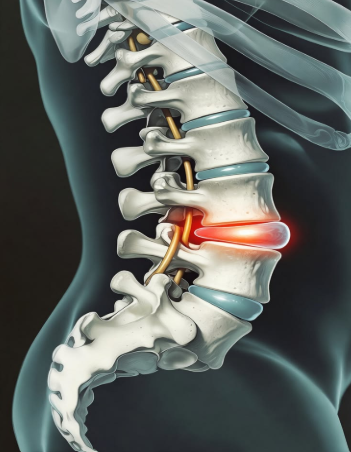
Lumbar disc herniation remains one of the primary drivers of debilitating sciatica—a sharp, radiating leg pain caused by mechanical compression of spinal nerve roots. When conservative interventions fail, surgical decompression becomes necessary to alleviate nerve impingement.
For decades, the gold standard was the open microdiscectomy, which required stripping paraspinal muscles and removing a section of lamina bone. Modern neuro-spine surgery has evolved past these limitations through Endoscopic Lumbar Discectomy.
A Comparative Evaluation of Approaches
| Clinical Metric | Open Microdiscectomy | Endoscopic Discectomy |
|---|---|---|
| Incision Dimension | 3 to 5 cm | Less than 1 cm |
| Muscle Trauma | Disrupted and retracted | Dilated and completely spared |
| Hospital Length of Stay | 2 to 3 Days | Same-Day Discharge |
| Recovery to Daily Activity | 4 to 6 Weeks | 1 to 2 Weeks |
The Endoscopic Protocol
A miniature tubular retractor equipped with an ultra-high-definition camera and fiber-optic light is introduced through a sub-centimeter incision directly to the herniation site. The clear, magnified visual field allows the neurosurgeon to isolate the specific disc fragment and extract it cleanly without altering the structural stability of the spine.
Clinical Takeaway
Because ligaments and surrounding muscles remain entirely unaltered, post-operative mechanical back pain is virtually eliminated, enabling patients to walk out of the facility on the same day completely relieved of sciatic leg pain.
Have a question about this topic?
Book a consultation for personalised, expert advice.